
Enterprise Telehealth & RPM ROI Architect
Institutional-grade financial engine for Hospital CFOs. Model the massive arbitrage of converting uncompensated patient readmissions into recurring Remote Patient Monitoring (RPM) billing revenue.
First-Year Financial Impact
The Unit Economics of Value-Based Care: Monetizing the “Empty Bed” in 2026
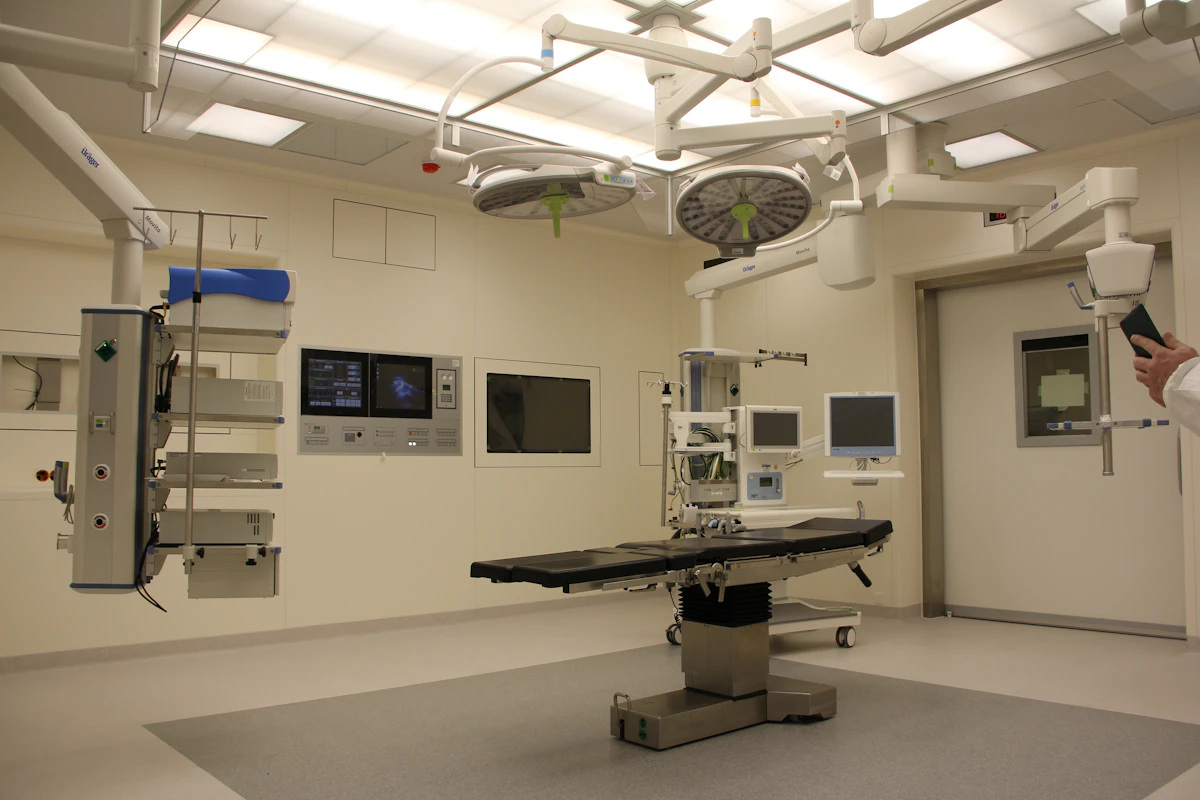
In the high-stakes financial landscape of the 2026 healthcare system, the old “Fee-for-Service” model is functionally dead. For a **Senior Healthcare Economics Architect**, a hospital bed occupied by a returning chronic-care patient is no longer a revenue center; it is a massive financial liability. Governments and private insurers actively penalize hospital networks for high readmission rates. The modern clinical mandate is counter-intuitive: The most profitable patient is the one who stays home.
This macro-economic pivot is driven by **Remote Patient Monitoring (RPM)** and advanced Telehealth integrations. By deploying FDA-approved biometric sensors to a patient’s home, hospitals achieve a dual-arbitrage. First, they drastically reduce the 30-day readmission penalties. Second, they unlock highly lucrative CPT (Current Procedural Terminology) billing codes that pay the hospital monthly recurring revenue simply for monitoring the data. Our **RPM Arbitrage Predictor** mathematically models this transformation.
The Mathematical Friction of Readmissions
To professionally evaluate an RPM software investment, a CFO must calculate the “Cost of Inaction.” Every time a heart failure or COPD patient bounces back into the ER, the hospital loses an average of $15,000 to $20,000 in uncompensated care and regulatory fines. The institutional equation for Net Clinical ROI is:
*Where V = Patient Vol, R = Readmission Rate, C_pen = Penalty Cost, and Rev_rpm = Monthly Reimbursement.*
When you execute this formula in the engine above, the financial leverage becomes undeniable. Spending $45 a month on a software platform to monitor a patient yields $120 a month in direct insurance reimbursement. However, the true alpha lies in the first half of the equation: reducing a 20% readmission rate by just 40% often saves millions of dollars in avoided catastrophic care costs.

3 Strategic Pillars of Clinical RPM Arbitrage
- 1. The “Recurring Revenue” Hospital: Traditionally, hospitals only made money when a procedure occurred. RPM transforms healthcare economics by introducing a SaaS-like recurring revenue model. Monitoring 5,000 patients at a net margin of $75/month generates $4.5 Million in pure annual profit without a single patient stepping foot in the clinic.
- 2. Opportunity Cost of the Physical Bed: A bed taken by an uncompensated readmission cannot be used for a highly profitable elective surgery (e.g., orthopedics or cardiology). RPM clears the physical infrastructure, allowing Medical Directors to optimize the “Yield per Square Foot” of the hospital.
- 3. AI-Driven Triage Efficiency: Modern RPM platforms utilize machine learning to filter out “noise.” Nursing staff no longer call 500 patients; the AI flags the 12 patients whose biometric data indicates an impending crisis. This drastically lowers the operational expenditure (OpEx) of the clinical staff.

Frequently Asked Questions (Healthcare Arbitrage)
In the US Medicare system (and increasingly globally), specific codes like CPT 99454 (providing the device) and CPT 99457 (spending 20 minutes reviewing data) allow clinics to legally and ethically bill insurance companies for remote care, creating the financial engine for telehealth.
Initially, it requires a dedicated triage team. However, the net math works out in the hospital’s favor. One trained RPM nurse, augmented by AI software, can safely monitor 250 to 400 patients simultaneously, creating massive labor efficiency compared to the 1-to-5 ratio of physical hospital wards.
It is the macro-shift where insurance pays hospitals based on the health outcome of the patient, rather than the sheer number of procedures performed. RPM is the ultimate tool for Value-Based Care because it prevents the patient’s health from deteriorating in the first place.

Developed by Ahmet
Founder of Global Ledger News. Senior Healthcare Economics Architect specializing in Value-Based Care modeling, RPM financial arbitrage, and clinical workflow optimization. Operating from the strategic business hub of Denizli, Türkiye.