
Institutional Sports Franchise & Real Estate Arbitrage Simulator
Model the apex of Alternative Assets. Calculate the 10-Year ROI of acquiring a Tier-1 Sports Franchise by combining explosive Media Rights valuations with the creation of a massive, stadium-anchored Mixed-Use Real Estate ecosystem.
The End of the Billionaire Hobby: Sports as an Alternative Asset Class in 2026
For a century, owning a major sports franchise was the ultimate vanity project for a billionaire. It was a trophy, an emotional asset that rarely made operational sense. In 2026, the global financial ecosystem has violently rejected this premise. Private Equity (PE) titans—from Clearlake Capital to Silver Lake and sovereign wealth funds (like Saudi PIF)—have aggressively entered the market. They do not view teams like Chelsea, the Dallas Cowboys, or Formula 1 teams as trophies; they view them as highly scalable, mathematically perfect Alternative Asset Classes.
The institutionalization of sports relies on a dual-engine financial model. You do not buy a team to make money selling hot dogs and tickets. You buy a team to capture explosive Media Rights Growth and to execute a massive Real Estate Arbitrage play around the stadium. Using our Institutional Sports Franchise Simulator, financial architects can model this multi-billion dollar ecosystem over a 10-year holding period.
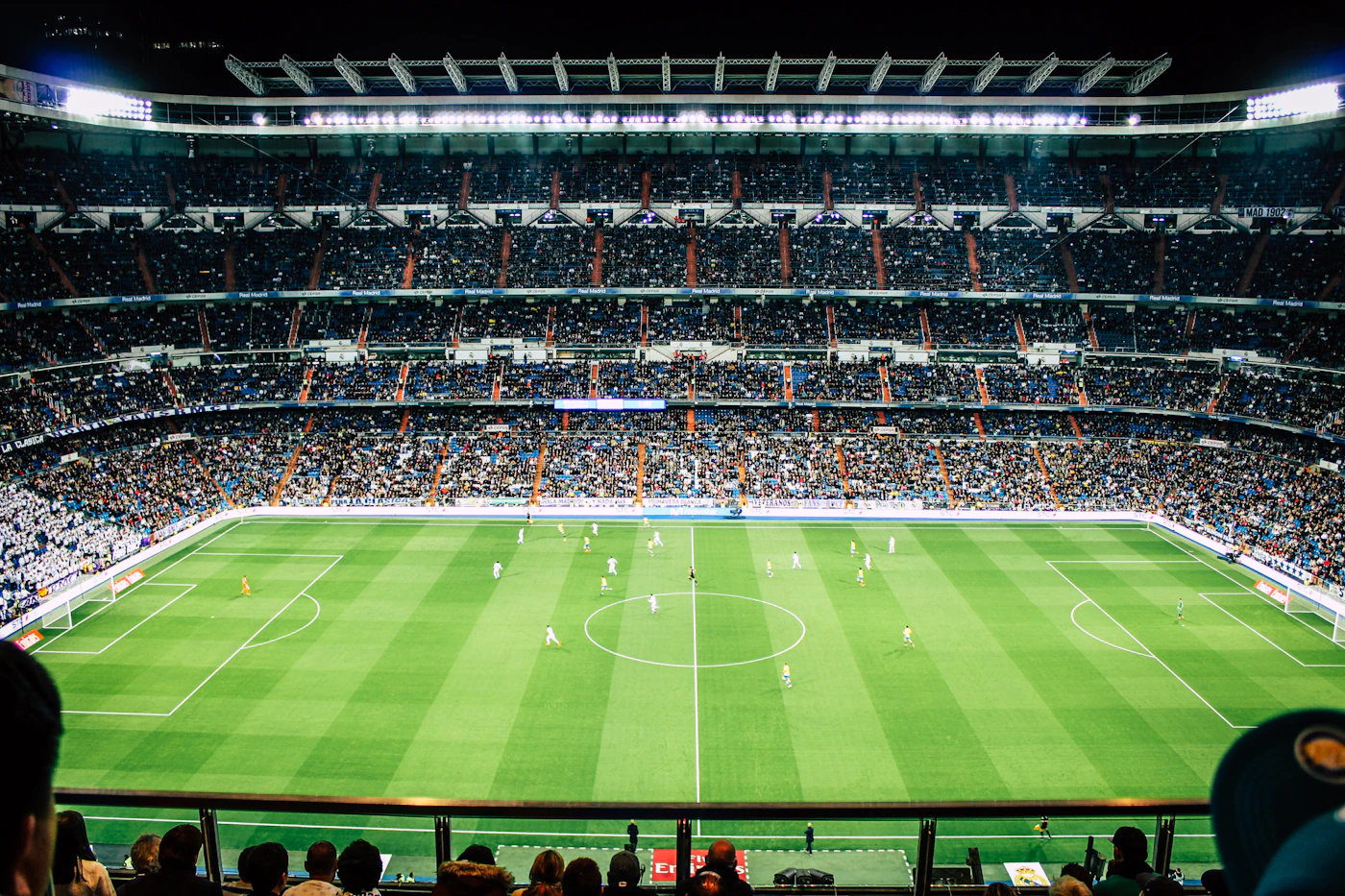
Engine 1: The Media Rights Monopoly
The first engine of value creation is the broadcast rights. In 2026, live sports are the last remaining form of “appointment television.” In an era where streaming platforms (Netflix, Amazon Prime, Apple TV+) are fighting a brutal war for subscriber retention, live sports are the ultimate weapon.
Because these tech giants have virtually unlimited balance sheets, they are bidding up sports media rights at an astronomical, compounding rate. When you acquire a franchise for $3.5 Billion, you are essentially buying a monopoly on a scarce cultural IP. If media revenues grow at a conservative 8% per year, the valuation of the core franchise will double in roughly nine years. This is pure, passive multiple expansion driven entirely by external tech-sector competition.

Engine 2: The Stadium Real Estate Arbitrage
The second, and often more profitable, engine is Real Estate. When a PE firm buys a franchise, they almost always acquire the stadium and the massive, underutilized parking lots surrounding it. This land is completely reimagined into a “Mixed-Use Entertainment District”.
As modeled in our simulator, the PE firm injects a massive CapEx (e.g., $1.2 Billion) to build luxury hotels, corporate office space, high-end retail, and residential apartments directly adjacent to the stadium. Because the stadium guarantees millions of affluent visitors per year, commercial rents in this district are significantly higher than the city average.
Assuming a conservative 9% Yield on Cost (YOC) for this development, a $1.2 Billion investment generates $108 Million in annual Net Operating Income (NOI). In Year 10, when the PE firm exits, they spin off this real estate and sell it to a pension fund at a 5.5% Cap Rate. That $1.2 Billion physical asset is now valued at nearly $2 Billion. This is classic real estate arbitrage, subsidized by the cultural power of the sports team.

Sponsorships and Tokenized IP
Beyond media and real estate, 2026 introduces hyper-efficient monetization of Intellectual Property (IP). Stadium naming rights are now sold to fintech and AI companies for hundreds of millions of dollars over 20-year contracts. Furthermore, global fanbases are monetized through blockchain-based loyalty tokens, creating continuous micro-transactions from fans in Asia or Europe who may never physically attend a game.
These revenue streams are high-margin and highly predictable, which compresses the risk profile of the franchise and drives the valuation multiple even higher.

Conclusion: The Architecture of Cultural Capital
A sports franchise in 2026 is a holding company. It is a media production studio, a commercial real estate developer, and a global lifestyle brand wrapped in the jersey of a local team.
Utilize the Global Ledger Sports Arbitrage Simulator to architect the perfect acquisition. Model the required real estate CapEx against the projected media growth. The firms that win this decade are the ones who realize that the game on the field is merely the marketing department for the multi-billion dollar financial engine running the stadium.

Ahmet
Director of Sports Private Equity & Real Estate StrategyFounder of Global Ledger News. Operating from Denizli, Türkiye, Ahmet specializes in the financialization of alternative assets. He advises global mega-funds and sovereign wealth on Sports Franchise acquisitions, Stadium Mixed-Use Real Estate development, and Media Rights arbitrage across the 2026 institutional landscape.