
Hyper-Scale AI Data Center & Compute Real Estate ROI Simulator
Architect the infrastructure of the 2026 cognitive revolution. Model the Capital Expenditure (CapEx) of a MegaWatt-scale AI Data Center, project Triple-Net (NNN) lease revenues from Hyperscalers, and calculate the Institutional Exit Cap Rate Arbitrage.
The Digital Real Estate Boom: Architecting the Brains of 2026
Forget skyscrapers. Forget luxury shopping malls. In the 2026 global real estate market, the most valuable square footage on planet Earth does not house human beings; it houses Nvidia GPU clusters. The explosion of Generative AI, Large Language Models (LLMs), and autonomous enterprise agents has created an insatiable, exponential demand for compute power. This has birthed the most aggressive infrastructure land-grab since the railroad boom: The Hyper-Scale AI Data Center.
Institutional Private Equity firms (like Blackstone, KKR, and Brookfield) have entirely pivoted their real estate funds to this singular asset class. They are not tech companies; they are developers. They secure the land, navigate the brutal regulatory permitting processes, and most importantly, they secure the power. Utilizing our Hyper-Scale AI Data Center ROI Simulator, financial architects can model the staggering CapEx required to build these modern cognitive fortresses and the multi-billion dollar exit valuations they command.
Deconstructing the Metric: MegaWatts (MW), Not Square Feet
In traditional commercial real estate, you value a property based on its square footage. In the data center ecosystem of 2026, square footage is practically irrelevant. The sole metric of value is Power Capacity (MegaWatts – MW).
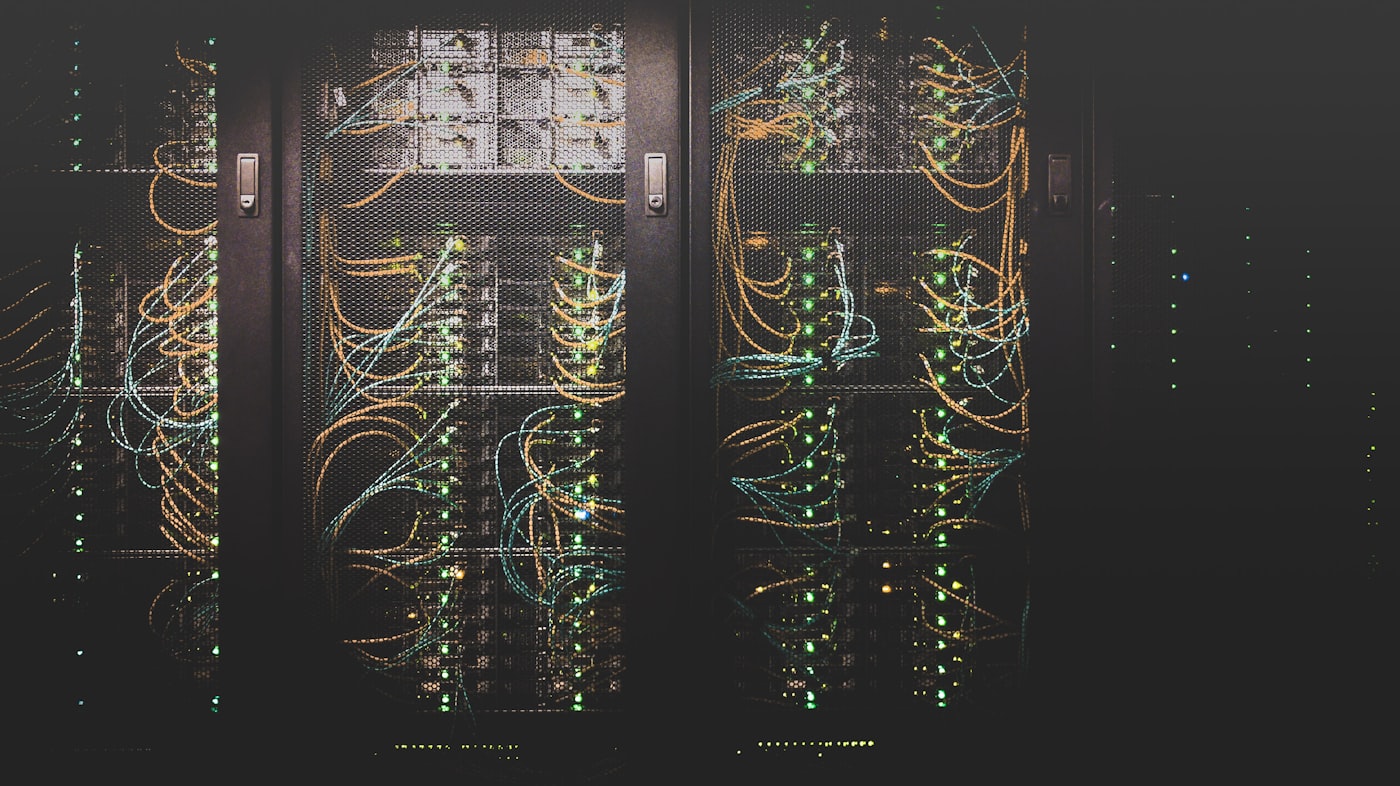
An AI Data Center is essentially a highly refined, heavily secured electrical substation with a roof on it. A standard facility built in 2026 might boast 50 MW to 100 MW of IT power capacity. To put this in perspective, a 100 MW facility consumes enough electricity to power a medium-sized city of 80,000 homes. Because of this massive energy draw, the Development CapEx per MW is staggering. Developers must pay for direct high-voltage grid interconnects, massive arrays of backup diesel generators, and advanced electrical switchgear. In our simulator, building a 50 MW facility at $12 Million per MW requires a mind-bending $600 Million upfront capital investment.

The Triple-Net (NNN) Lease: The Ultimate Cash Flow
Why do Private Equity funds spend $600 Million on a single building? Because of the tenant profile. The tenants are “Hyperscalers” (Amazon AWS, Microsoft Azure, Google Cloud) or massive AI labs (OpenAI, Anthropic). These are the most credit-worthy corporations in human history.
When a developer finishes the powered shell, the Hyperscaler signs a 10 to 15-year Triple-Net (NNN) Lease. In a NNN lease, the developer does not pay for the electricity the servers consume. The tenant pays for their own servers, their own power usage, the property taxes, the building insurance, and the facility maintenance.
The rent is calculated based on capacity: $ per kW per Month. As shown in the simulator, leasing a 50 MW (50,000 kW) facility at $160/kW/Month generates an astonishing $96 Million in Gross Annual Revenue. Because it is a NNN lease, the developer’s operational expenses are near zero. The resulting Net Operating Income (NOI) drops almost entirely to the bottom line, yielding a massive Yield on Cost (YOC) of 15% or higher.

Cap Rate Arbitrage: The Billion-Dollar Exit
Private Equity developers do not hold properties forever; they manufacture yield and sell it. This brings us to the ultimate liquidity event: Cap Rate Arbitrage.
Once the $600 Million data center is built, energized, and secured with a 15-year ironclad lease from Microsoft or Google, all the “Development Risk” has been eliminated. The asset is now viewed by the financial markets as a hyper-secure, bond-like instrument. Sovereign Wealth Funds (like Saudi PIF or Norway’s Norges Bank) and massive pension funds will line up to buy this stabilized cash flow.
They will value the asset by dividing the NOI by a low Exit Cap Rate (e.g., 5.5%). An asset generating $91.2 Million in NOI at a 5.5% Cap Rate is valued at $1.65 Billion. By risking $600 Million to build the facility, the developer executes a $1.05 Billion net profit arbitrage. This is the absolute pinnacle of 2026 corporate real estate finance.
Conclusion: The Architecture of the New Economy
The physical infrastructure of the internet is being rebuilt to accommodate artificial intelligence. Building an AI Data Center is fraught with severe risks: supply chain delays for transformers, localized political pushback against water usage, and unprecedented capital requirements. However, the mathematical rewards are unequaled in modern capitalism.
Utilize the Global Ledger Hyper-Scale Data Center Simulator to stress-test your thesis. Model your MW capacity against escalating CapEx costs. Secure your NNN lease rates. When you successfully architect the real estate of the cognitive revolution, you are not merely participating in the tech boom; you are owning the ground it stands on.

Ahmet
Director of Tech Real Estate & Infrastructure StrategyFounder of Global Ledger News. Operating from Denizli, Türkiye, Ahmet specializes in the architecture of digital infrastructure and private equity CapEx modeling. He advises global mega-funds, hyperscale tenants, and sovereign wealth on AI Data Center development, MW valuation, and Cap Rate arbitrage across the 2026 technology landscape.