
Enterprise Cloud Cost & Egress Simulator
Master your unit economics. Adjust data storage and outbound bandwidth to instantly calculate estimated expenses across major cloud providers like AWS, Azure, and Google Cloud.
Enterprise Cloud Bandwidth Cost Calculator: The Ultimate 2026 Egress Simulator
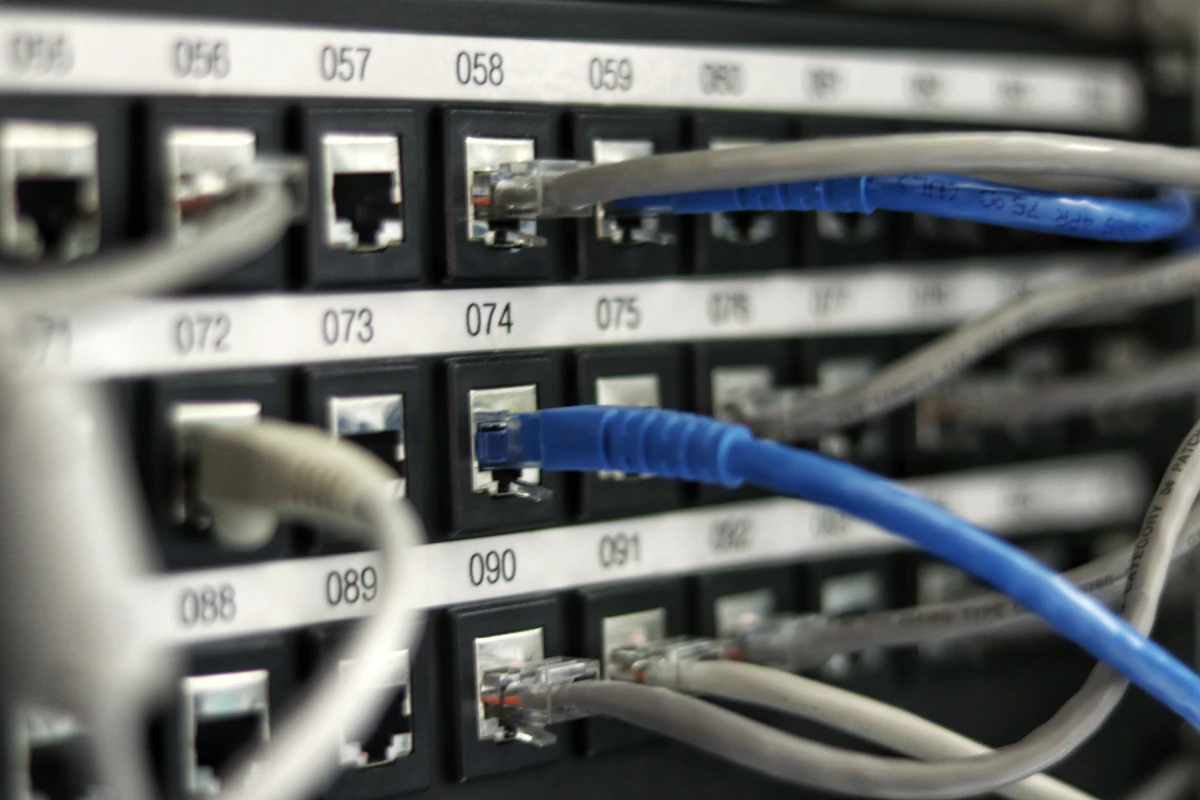
As we navigate through the highly competitive technological landscape of 2026, the guiding philosophy for every Chief Technology Officer (CTO), backend developer, and startup founder has decisively shifted from “Growth at all costs” to “Growth with absolute efficiency.” We are currently operating in an era of petabyte-scale data, machine learning pipelines, and massive global content distribution. The cloud is simultaneously your greatest operational enabler and your most dangerous financial leak. While industry-leading providers like Amazon Web Services (AWS), Microsoft Azure, and Google Cloud Platform (GCP) offer unprecedented and almost magical scalability, their pricing models remain notoriously opaque. This lack of transparency frequently leads to the dreaded “Bill Shock”—the moment a successful application starts to go viral, only to bankrupt its creators through unforeseen infrastructure expenses.
At Global Ledger News, we approach cloud architecture with the meticulous mindset of a forensic financial auditor. In our view, every single file uploaded, every high-resolution image served, and every complex database query executed is a tangible line item on your company’s ledger. We have engineered the **Enterprise Cloud Bandwidth Cost Calculator** to transform these abstract technical metrics into concrete, actionable financial data. By manipulating the emerald-green toggles above, you can instantly observe how a sudden surge in raw data storage or an unexpected spike in outbound bandwidth (often referred to as Egress) will directly impact your monthly operational burn rate. Understanding these numbers is the critical first step toward achieving true software scalability.
Decoding the “Egress Tax”: The Most Overlooked Expense in Cloud Computing
If you ask a junior developer about the primary costs associated with cloud computing, they will almost certainly point to the hourly price of virtual machines (such as AWS EC2 instances) or managed database hosting (like Amazon RDS). However, in the data-heavy economy of 2026, where applications rely on serving rich media, real-time video, and heavy client-side JavaScript, the real profit killer is **Data Egress**. Cloud providers operate on an ingenious business model: they generally allow you to move massive amounts of data *into* their system for absolutely free (Ingress), but they charge you a steep premium to move that exact same data *out* to your end-users.
Egress refers to any digital data that leaves the cloud provider’s internal network to travel across the public internet. This includes serving images to your customers’ browsers, streaming video files, downloading backups, or even returning JSON responses from an API. While the cost of raw hard drive storage has plummeted over the last decade, bandwidth prices have remained stubbornly high, often averaging between $0.08 and $0.12 per Gigabyte for standard public internet routing.
This “Egress Tax” is the precise reason why many highly popular, media-heavy startups fail to achieve profitability despite massive user acquisition. Consider a scenario where your application serves a 5MB high-resolution hero image to one million unique global users. Without a proper Content Delivery Network (CDN) strategy in place, your cloud provider will charge you directly for 5 Terabytes of outbound bandwidth. In many cases, your bandwidth bill could easily exceed your gross revenue. Our Enterprise Cloud Bandwidth Cost Calculator helps you visualize this exact dynamic, allowing you to model extreme traffic scenarios and pinpoint the mathematical tipping point where your infrastructure costs threaten to overwhelm your profit margins.

Comparing the Titans: AWS vs. Google Cloud vs. Azure Bandwidth Pricing
When planning your enterprise architecture, choosing the right provider is not merely a technical decision; it is a deep financial commitment. Let us analyze how the three major cloud titans handle bandwidth and storage pricing in 2026. Understanding these nuances can save your organization hundreds of thousands of dollars annually.
1. Amazon Web Services (AWS) remains the undisputed market leader, but it is also one of the most expensive when it comes to outbound traffic. While their S3 standard storage is competitively priced around $0.023 per GB, their egress fees (data transfer out to the internet) typically start at $0.09 per GB after the free tier. AWS justifies this premium through its incredibly robust global backbone and unparalleled reliability. For enterprises, the hidden cost often lies in inter-region transfer—moving data between an AWS server in Virginia and one in London also incurs bandwidth charges.
2. Google Cloud Platform (GCP) has heavily positioned itself as the developer-friendly alternative, boasting arguably the fastest private fiber-optic network on the planet. GCP’s egress pricing is complex, organized into “Premium” and “Standard” network tiers. The Premium tier routes traffic over Google’s private global network for as long as possible before handing it off to the public internet, ensuring lower latency but at a higher cost (often matching AWS at $0.08 – $0.12 per GB). The Standard tier hands the traffic off to the public internet much earlier, which is cheaper but potentially less reliable for real-time applications.
3. Microsoft Azure is deeply entrenched in the corporate enterprise sector. Their pricing structure closely mirrors AWS, with outbound data transfer rates tiered based on volume. However, Azure often wins major corporate contracts by bundling cloud credits with existing Microsoft enterprise licenses (like Office 365 or Active Directory). For pure bandwidth economics, Azure can be costly unless you negotiate an Enterprise Agreement (EA) with aggressive volume discounts.
5 Strategic Pillars of Cloud Cost Optimization in 2026
Optimizing your enterprise cloud footprint requires significantly more than just picking the cheapest provider on a spreadsheet. It requires a fundamental shift in how your engineering team architects digital assets. Here are five enterprise-grade strategies to keep your infrastructure ledger deeply in the green:
- 1. Implementing Multi-Tiered Storage Lifecycles: Not all data is created equal, and not all data needs to be instantly accessible on expensive, high-speed SSD-backed storage. Engineers must use automated “Life Cycle Policies” to aggressively move older, less-frequently accessed data (like old user uploads or system logs) to “Cold” or “Glacier” archival tiers. This single architectural decision can reduce your raw storage costs by up to 90%, while keeping your data perfectly safe for regulatory compliance.
- 2. Leveraging the Edge (CDN Dominance): By intelligently utilizing a modern Content Delivery Network (CDN) like Cloudflare, Fastly, or Amazon CloudFront, you can cache your most popular static assets at the “Edge”—proxy servers physically located closer to your end-users. This does not just improve page load speeds; it dramatically reduces the amount of data your primary origin cloud server has to send out, effectively bypassing the cloud provider’s high egress fees.
- 3. Advanced Data Compression and Format Optimization: In 2026, serving a standard uncompressed JPEG or a bulky MP4 file is considered a catastrophic financial mistake. Modern, highly efficient formats like WebP, AVIF, and H.265 video offer significantly better visual compression with zero loss in perceived quality. If you can algorithmically reduce an image’s payload size from 500KB to 50KB before it leaves the server, you have effectively cut your bandwidth bill for that specific asset by 90%. Over billions of views, this equates to massive financial savings.
- 4. Database Query Optimization and Caching: Every time your application queries the database and sends the data back to the user, it consumes bandwidth. By implementing an aggressive Redis or Memcached layer, you prevent the database from doing repetitive work. Furthermore, GraphQL allows frontend applications to request *only* the specific data fields they need, rather than downloading a massive REST API payload where 80% of the data is discarded by the browser.
- 5. The Rise of Cloud Repatriation: For companies operating at a massive, predictable scale, the public cloud might no longer make financial sense. We are seeing a major trend of “Cloud Repatriation,” where mature tech companies rent physical server racks in colocation centers and buy their own hardware. While they lose the infinite elasticity of AWS, they eliminate egress fees entirely. This is a highly advanced strategy, but for companies spending upwards of $100,000 monthly on cloud services, owning the metal is often the most profitable path forward.

Frequently Asked Questions (Cloud Infrastructure Economics)
This is a strategic business model designed to create vendor lock-in. By making it completely free to upload your data (Ingress), cloud providers encourage you to store massive datasets on their platform. However, once your data is fully integrated into their ecosystem, the high Egress fees act as a financial barrier, making it prohibitively expensive for you to migrate your application to a competing cloud provider.
Every single time a user’s web browser or mobile app asks your cloud storage for a file (a GET request), the cloud provider charges a tiny fraction of a cent. While these costs seem utterly negligible at first glance, they can skyrocket exponentially for applications that use thousands of small icons, continuous polling, or granular data points. Bundling files into sprite sheets or using aggressive local browser caching is a common engineering strategy to reduce the raw volume of requests.
Absolutely, but only if you have significant leverage. If your company is committing to an annual spend of $500,000 or more, you qualify for Enterprise Discount Programs (EDP). During these negotiations, CTOs will often trade a multi-year lock-in commitment in exchange for a 20% to 40% reduction in specific egress and storage costs. If you are a startup, your best bet is applying for programs like AWS Activate, which provides free credits rather than discounted rates.

Developed by Ahmet
Founder of Global Ledger News. Senior Cloud Infrastructure Architect specializing in highly scalable SaaS architectures, egress cost optimization strategies, and global CDN deployments. Engineering the high-performance digital backbone of tomorrow from the innovation hub of Denizli, Türkiye.